
Small law firms can set up AI agents for matter triage and contract review by partnering with specialized vertical AI providers like Cogsmith. These providers deploy agents that prepare work while ensuring the firm's own lawyers remain in the review loop for all consequential actions. This guide covers deployment options, workflow design, and vendor selection for regulated legal practices.
Day Offboarding Protocols
Day offboarding protocols are the procedures used to remove access and transfer data when an AI agent or vendor relationship ends. For law firms, these protocols are critical to maintaining client confidentiality and regulatory compliance. A robust offboarding plan ensures that no residual data remains in third-party systems after the contract terminates.
Access Revocation and Data Return
The first step in offboarding is the immediate revocation of all API keys and administrative access. The vendor must provide a mechanism to export all matter data, including drafts, logs, and decision histories. This data should be returned in a standard format that the firm's practice management system can ingest. Firms should verify that the vendor has deleted all copies of the data from their servers within a defined timeframe.
Compliance Audit and Documentation
After data return, the firm should conduct a compliance audit to confirm that no client information was retained by the vendor. This audit should be documented and stored in the firm's compliance file. Cogsmith emphasizes that operational details regarding data handling are discussed during workflow scoping, ensuring that offboarding requirements are met before the pilot begins. This proactive approach prevents data leakage and maintains trust with clients.
Local Deployment Options
Local deployment options refer to the methods by which AI agents are hosted and operated, either on-premises or in the cloud. For law firms, the choice of deployment model impacts data security, latency, and compliance. On-premises deployment offers maximum control over data but requires significant infrastructure investment. Cloud deployment offers scalability and lower upfront costs but requires trust in the vendor's security practices.
On-Premises vs. Cloud Hosting
On-premises hosting allows the firm to keep all data within its own network. This is ideal for firms with strict data residency requirements. Cloud hosting, on the other hand, allows the vendor to manage the infrastructure, reducing the firm's operational burden. Cogsmith deploys vertical AI agents that are customized to the firm's systems, ensuring that the deployment model aligns with the firm's security posture. The choice between on-premises and cloud should be based on the firm's specific regulatory obligations and technical capabilities.
Hybrid Deployment Models
Hybrid models combine on-premises and cloud components to balance security and scalability. For example, sensitive client data may be processed on-premises, while less sensitive tasks are handled in the cloud. This approach allows firms to leverage the benefits of both models. Cogsmith's custom builds can accommodate hybrid deployment, connecting to the stack the team already uses. This flexibility ensures that the AI agent integrates seamlessly with the firm's existing infrastructure.
Matter Triage Workflows
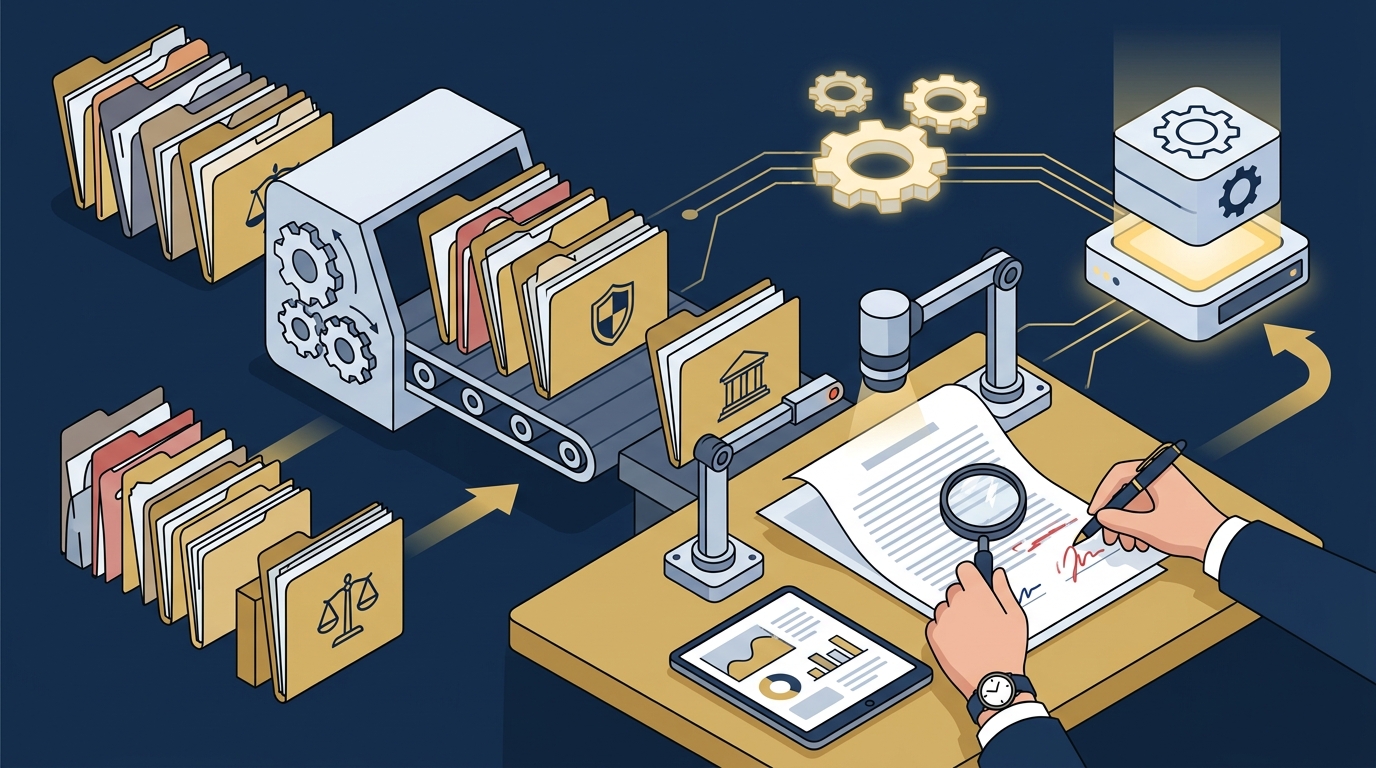
Matter triage workflows are the processes by which new legal inquiries are evaluated and assigned to the appropriate attorney. AI agents can automate the initial stages of triage, such as collecting incident details and organizing intake packets. This allows attorneys to focus on high-value tasks rather than administrative work. The agent prepares the work, and a human stays in the loop for consequential actions.
Automated Intake and Document Organization
Human Review and Approval
While the AI agent prepares the intake packet, the attorney reviews and approves the final summary. This human-in-the-loop approach ensures that the firm's own lawyers stay in the review loop for all consequential actions. The agent does not make legal determinations; it only organizes and presents information. This division of labor allows firms to scale their intake capacity without compromising the quality of legal advice. Cogsmith's sample workflow for personal injury intake demonstrates this approach, showing how the agent can streamline the process while maintaining attorney oversight.
Practice Management Integration
Practice management integration refers to the connection between the AI agent and the firm's existing software systems. This integration allows the agent to access and update matter data in real time. It also ensures that the agent's actions are logged and auditable. Cogsmith offers custom builds that include CRM and EMR connectors, enabling seamless integration with the firm's practice management system.
API Connectivity and Data Sync
The AI agent connects to the practice management system via API, allowing it to read and write data. This connection ensures that the agent has access to the most up-to-date matter information. It also allows the agent to update the system with new data, such as intake summaries and follow-up notes. The integration should be tested thoroughly to ensure that data sync is accurate and reliable. Cogsmith's implementation hours cover one-off integrations and scoped workflow wiring, ensuring that the connection is secure and functional.
Workflow Automation and Reporting
Once integrated, the AI agent can automate routine tasks, such as sending reminders and generating reports. These tasks are performed in the background, freeing up attorneys' time for client-facing work. The agent also generates reports on its performance, including the number of matters triaged and the time saved. These reports help the firm measure the ROI of the AI agent and identify areas for improvement. Cogsmith's quarterly trust audit reports provide additional insights into the agent's performance and compliance.
Legal AI Vendors
Vendor Selection Criteria
Firms should evaluate vendors based on their ability to meet the firm's specific needs. Key criteria include the vendor's experience with legal workflows, their security certifications, and their support model. Cogsmith offers operated AI-agent retainers for regulated small businesses, providing continuous tuning and monitoring. This model ensures that the agent is always up to date with the latest legal requirements and best practices. Firms should also consider the vendor's pricing model, which may be based on usage volume or a monthly retainer.
Comparison of Vendor Models
| Vendor Model | Best For | Key Features |
|---|---|---|
| Vertical AI Retainer | Regulated SMBs | Continuous tuning, human-in-the-loop, trust audits |
| Hourly Implementation | One-off integrations | Scoped SOW, transparent logs, no minimum commitment |
| Custom Build | Complex workflows | CRM/EMR connectors, voice infrastructure, compliance design |
Key Takeaways
- Day offboarding protocols are essential for maintaining client confidentiality and regulatory compliance.
- Local deployment options include on-premises, cloud, and hybrid models, each with different security and scalability trade-offs.
- Matter triage workflows can be automated to streamline intake and document organization, with human review for consequential actions.
- Practice management integration ensures that the AI agent can access and update matter data in real time.
- Legal AI vendors should be selected based on their experience with regulated industries and their ability to integrate with existing systems.
- Cogsmith offers vertical AI agents for regulated small businesses, with a focus on trust and compliance.
- Human-in-the-loop guardrails ensure that the firm's own lawyers stay in the review loop for all high-stakes actions.
- Quarterly trust audit reports provide insights into the agent's performance and compliance.
Frequently Asked Questions
What is a vertical AI agent?
How does human-in-the-loop work in matter triage?
Human-in-the-loop means that the AI agent prepares the work, but a human reviews and approves all consequential actions. This ensures that the firm's own lawyers stay in the review loop.
What are the benefits of local deployment?
Local deployment offers maximum control over data security and compliance. It is ideal for firms with strict data residency requirements.
How does practice management integration work?
Practice management integration connects the AI agent to the firm's existing software systems via API. This allows the agent to access and update matter data in real time.
What is a trust audit report?
A trust audit report is a document that details the AI agent's performance and compliance. It is generated quarterly and provides insights into the agent's actions and decisions.
How much does a vertical AI retainer cost?
The cost of a vertical AI retainer depends on the scope of the workflow, including integrations, expected volume, and oversight requirements. Cogsmith offers quote-based pricing for retainers.
Can the AI agent make legal determinations?
No, the AI agent does not make legal determinations. It only organizes and presents information. All legal decisions are made by the firm's own lawyers.
What happens if the pilot does not meet its metric?
If the pilot does not meet its metric, the firm and the vendor will discuss the results and determine next steps. This may include adjusting the workflow or ending the pilot.
Conclusion
Setting up an AI agent for matter triage and contract review is a strategic decision for small law firms. By partnering with a specialized vertical AI provider like Cogsmith, firms can automate routine tasks while maintaining attorney oversight. This approach improves efficiency and compliance, allowing firms to scale their operations without compromising quality. To start, scope a workflow with Cogsmith and discuss your specific needs.