
AI-powered intake automation is the use of specialized software to collect, organize, and route client or patient data while maintaining strict compliance. For owner-operated businesses in healthcare, legal, and insurance, the best options are vertical-specific AI agents that prepare work for human review rather than acting autonomously. This guide covers how to implement these systems safely, focusing on incident response, vendor risk, and regulatory mapping. We will examine specific workflows for legal intake, healthcare patient onboarding, and insurance claims processing. The goal is to help you choose a solution that reduces administrative burden without compromising your regulatory posture.
Incident Response Planning
Incident response planning is the process of defining how a business detects, contains, and recovers from a data breach or system failure. In regulated industries, an AI system error is not just a technical glitch; it is a potential compliance violation. You must define what happens when an AI agent misclassifies a sensitive document or fails to flag a critical legal deadline. The plan should include clear escalation paths to human supervisors. It is essential to test these paths during the pilot phase. If the AI cannot handle an edge case, it must stop and alert a human immediately. This ensures that no consequential action is taken without oversight. For additional details, review the AI Workflow and Pilot.
Defining Consequential Actions
A consequential action is any step that affects a client's rights, financial status, or health outcome. Examples include sending a legal demand letter or updating a patient's medical record. Your incident response plan must explicitly list these actions. The AI should be programmed to hold these actions for human approval. This guardrail prevents automated errors from becoming legal liabilities. It also provides a clear audit trail for regulators.
Vendor Risk Management
Vendor risk management is the assessment of the security and compliance practices of third-party service providers. When you deploy an AI agent, you are sharing data with a vendor. You must verify that the vendor follows strict data handling protocols. Look for vendors that provide transparent logs of every decision the AI makes. The vendor should also offer quarterly trust audit reports. These reports confirm that the system is operating within the agreed-upon scope. Avoid vendors that do not disclose their evidence status or data retention policies. Transparency is the primary indicator of a trustworthy partner in regulated spaces.
Scope and Guardrails
Effective vendor management requires defining the scope of the AI's authority. The vendor should only access the data necessary for the specific workflow. For example, an intake agent should not have access to billing records if it is only handling scheduling. This principle of least privilege reduces the risk of data exposure. It also simplifies the audit process. You should review the vendor's scope definitions during the onboarding phase.
Regulatory Requirement Mapping
Regulatory requirement mapping is the process of aligning your AI workflows with specific legal and industry standards. In healthcare, this means adhering to HIPAA. In legal, it involves maintaining attorney-client privilege. In insurance, it requires compliance with state-specific regulations. You must map each step of the AI workflow to a specific regulatory requirement. This ensures that the automation does not inadvertently violate a rule. For instance, if an AI collects health information, it must do so in a way that satisfies HIPAA's minimum necessary standard. This mapping should be documented and reviewed regularly.
Compliance Posture Design
Compliance posture design is the strategic configuration of your systems to meet regulatory expectations. It involves setting up the AI to prioritize compliance over speed. If there is a conflict between efficiency and compliance, the system must choose compliance. This design choice should be explicit in the vendor's documentation. It ensures that the AI behaves predictably in high-stakes situations. A well-designed compliance posture reduces the need for constant human intervention.
Legal Intake Automation
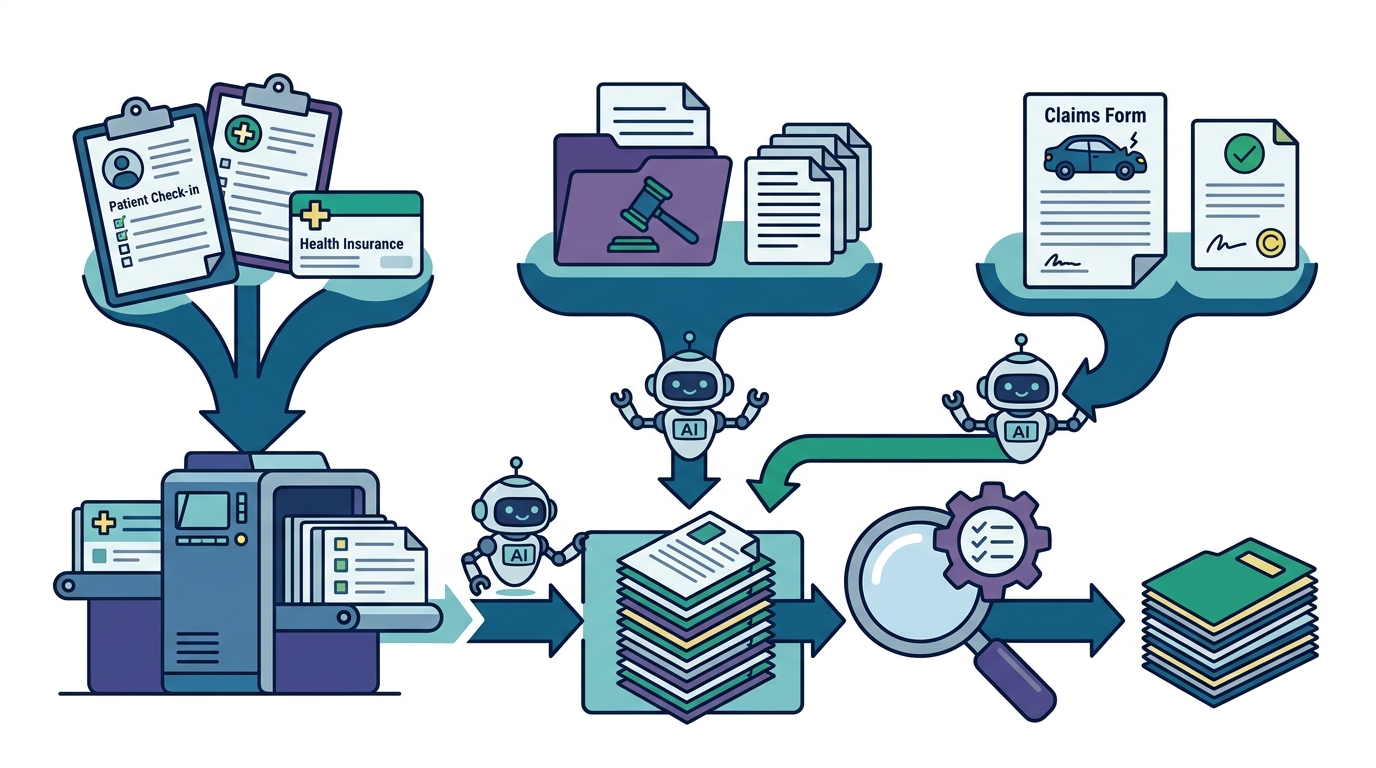
Legal intake automation is the use of AI to collect and organize case information from new clients. For law firms, this often involves personal injury or family law matters. The AI can collect incident details, dates, and available documents. It then organizes this information into a consistent matter summary. This reduces the time attorneys spend on initial data entry. The AI should flag missing information for attorney review. It should not make legal determinations. The goal is to prepare a clean intake packet for the legal team. This allows attorneys to focus on strategy rather than data collection.
Document Organization
Document organization is a critical part of legal intake. The AI should categorize uploaded files by type and relevance. It should identify key dates and parties mentioned in the documents. This creates a structured overview of the case. Attorneys can then review the summary and the flagged documents. This process ensures that no critical detail is overlooked. It also creates a consistent format for all new matters.
Healthcare Patient Intake
Healthcare patient intake is the process of collecting demographic, insurance, and medical history information from new patients. AI agents can handle this by sending secure requests for missing documents. They can track which items have been received and which are still outstanding. This reduces the back-and-forth between the front desk and the patient. The AI should prepare a follow-up list for the staff to review. It should not diagnose or provide medical advice. The focus is on administrative efficiency. This allows clinical staff to spend more time with patients.
Recall and Scheduling
Recall and scheduling is another key area for healthcare automation. The AI can identify overdue recall appointments and prepare reminder messages. It can check the scheduling queue to find the next available slot. It then prepares the reminder for staff approval. This ensures that patients are contacted in a timely manner. It also reduces the administrative burden on the front desk. The human review step ensures that the message is appropriate and accurate.
Insurance Claims Processing
Insurance claims processing is the workflow for gathering and submitting documentation for insurance payouts. For agencies, this often involves renewal preparation. The AI can gather renewal materials from the account and inbox. It can follow up on missing items with a draft for staff approval. It then prepares a producer-review packet with open questions. This helps producers review accounts more efficiently. The AI should not submit claims without human approval. The goal is to prepare the work, not to execute it. This maintains the human-in-the-loop requirement for consequential actions.
Renewal Preparation
Renewal preparation is a recurring task for insurance agencies. The AI can automate the collection of necessary documents. It can track the status of each item. It can draft follow-up emails for missing information. This reduces the time producers spend on administrative tasks. It also ensures that no renewal is missed. The human review step ensures that the packet is complete and accurate before submission.
AI Voice Agents
AI voice agents are software systems that handle phone calls using natural language processing. For regulated businesses, voice agents must be carefully scoped. They should handle routine inquiries like scheduling or status updates. They should not provide legal or medical advice. The agent should transfer the call to a human if the caller asks a complex question. This ensures that sensitive conversations are handled by a qualified professional. Voice agents can reduce missed calls and improve response times. They must be monitored for compliance with communication regulations.
Call Routing and Escalation
Call routing and escalation is the process of directing calls to the appropriate person or department. The AI should identify the caller's intent and route the call accordingly. If the intent is unclear or sensitive, the call should be escalated to a human. This ensures that the caller receives the appropriate level of service. It also prevents the AI from making unauthorized commitments. The routing logic should be tested during the pilot phase.
EHR and Practice Management Integrations
EHR and practice management integrations are the connections between AI agents and your core business systems. These integrations allow the AI to read and write data in your Electronic Health Record or practice management software. The integration must be secure and compliant. It should only access the data necessary for the specific workflow. For example, a scheduling agent should only access appointment data, not clinical notes. This limits the risk of data exposure. The integration should also provide a clear audit trail of all changes made by the AI.
Data Synchronization
Data synchronization is the process of keeping data consistent across multiple systems. The AI should ensure that data entered in one system is reflected in the other. This prevents discrepancies and errors. It also ensures that the human reviewer has the most up-to-date information. The synchronization process should be monitored for errors. Any discrepancies should be flagged for human review. This ensures data integrity across the organization.
Key Takeaways
- AI intake automation is the use of software to collect and organize client data while maintaining compliance.
- Incident response planning must define how to handle AI errors and data breaches.
- Vendor risk management requires verifying the security and compliance practices of your AI provider.
- Regulatory requirement mapping aligns AI workflows with specific legal and industry standards.
- Legal intake automation organizes case information into consistent matter summaries for attorney review.
- Healthcare patient intake reduces administrative burden by tracking missing documents and scheduling recalls.
- Insurance claims processing automates the collection of renewal materials for producer review.
- AI voice agents handle routine calls but must escalate complex or sensitive inquiries to humans.
Frequently Asked Questions
What is the primary benefit of AI intake automation for regulated businesses?
The primary benefit is the reduction of administrative burden while maintaining compliance. AI handles repetitive data collection and organization, allowing staff to focus on high-value tasks. It also ensures consistency in data entry and document organization.
How does AI ensure compliance in healthcare and legal settings?
AI ensures compliance by operating within defined guardrails. It prepares work for human review rather than acting autonomously. It also maintains a clear audit trail of all decisions and actions. This allows for easy verification of compliance with regulatory standards.
Can AI agents make legal or medical decisions?
No, AI agents should not make legal or medical decisions. They are designed to prepare work for human review. Consequential actions, such as sending a legal demand or updating a medical record, require human approval. This ensures that qualified professionals make the final decisions.
What is a consequential action in the context of AI automation?
A consequential action is any step that affects a client's rights, financial status, or health outcome. Examples include sending a legal letter or updating a patient's record. These actions must be reviewed and approved by a human before execution.
How do I choose the right AI vendor for my business?
Choose a vendor that provides transparent logs, quarterly trust audit reports, and clear scope definitions. The vendor should have a strong track record in your specific industry. They should also offer a pilot program to test the system in a controlled environment.
What is the role of human review in AI intake automation?
Human review is the final step in the AI workflow. It ensures that the AI's work is accurate and compliant. Humans review consequential actions and approve them for execution. This maintains the human-in-the-loop requirement for regulated industries.
How long does it take to implement an AI intake system?
Implementation time varies depending on the complexity of the workflow and the integrations required. A focused pilot can be completed in 90 days. This allows for testing and refinement before full deployment. The pilot phase helps identify any issues and adjust the system as needed.
What are the risks of using AI for intake automation?
The main risks are data breaches, compliance violations, and AI errors. These risks can be mitigated by implementing strong incident response planning, vendor risk management, and regulatory requirement mapping. Regular audits and monitoring are also essential to ensure ongoing compliance.
Conclusion
Implementing AI intake automation in regulated industries requires a careful balance of efficiency and compliance. By focusing on vertical-specific solutions, you can reduce administrative burden without compromising your regulatory posture. Cogsmith provides vertical AI agents designed specifically for regulated small businesses. We deploy and manage these agents to handle compliance-posture design, voice engagement, and operational workflows. Our approach ensures that a human stays in the loop for every consequential action. To discuss your specific workflow and scope a pilot, scope a workflow with Cogsmith.