
Small third-party logistics (3PL) providers can find AI workflow pilot programs through specialized vertical AI vendors that focus on regulated small businesses. Cogsmith offers a 90-day pilot specifically designed for small 3PLs to test carrier appointment and shipment status workflows. This guide covers how to scope a pilot, evaluate automation vendors, and understand the specific pilot structures available for logistics teams.
Pilot Scoping Methodology
Effective pilot scoping is the process of defining a specific, measurable workflow to test before committing to full-scale automation. For small 3PLs, this means identifying the most repetitive and text-heavy tasks that currently consume staff time. The goal is not to automate the entire business, but to isolate one high-volume workflow where AI can provide immediate value.
Identifying the Right Workflow
Logistics teams should look for workflows that involve recurring communication, such as carrier email triage or appointment scheduling. These tasks are ideal for AI agents because they follow predictable patterns. Cogsmith recommends starting with a workflow that repeats often enough to measure and matters enough to improve. This ensures the pilot generates meaningful data rather than just novelty.
Defining Success Metrics
A pilot is only useful if you can measure its impact. Teams should define baseline metrics before starting, such as the number of hours spent on phone and admin work or the volume of inbound calls. By establishing these baselines, you can calculate the time and labor value recovered during the pilot period. This data-driven approach helps justify the investment and sets clear expectations for the pilot's outcome.
Workflow Automation Vendors
Choosing the right vendor is critical for the success of your AI pilot. Not all automation platforms are built for regulated small businesses. General-purpose tools may lack the specific guardrails and compliance features that logistics and other regulated industries require. You need a partner that understands the nuances of your vertical.
Vertical-Specific vs. General-Purpose
Vertical-specific AI vendors focus on the unique challenges of a particular industry. For example, a vendor specializing in logistics will understand carrier protocols and shipment status updates. In contrast, general-purpose tools offer broad capabilities but may require significant customization to fit your specific needs. Cogsmith deploys vertical AI agents for small 3PLs, ensuring the solution is tailored to the logistics ecosystem from the start.
Evaluating Vendor Capabilities
When evaluating vendors, look for evidence of their trust and oversight practices. Does the vendor offer human-in-the-loop guardrails? Are prompts audited and decisions logged? These features are essential for maintaining control over consequential actions. A reliable vendor will provide transparency about how their AI agents operate and how they handle data. This transparency builds trust and ensures compliance with industry standards.
3PL Pilot Programs
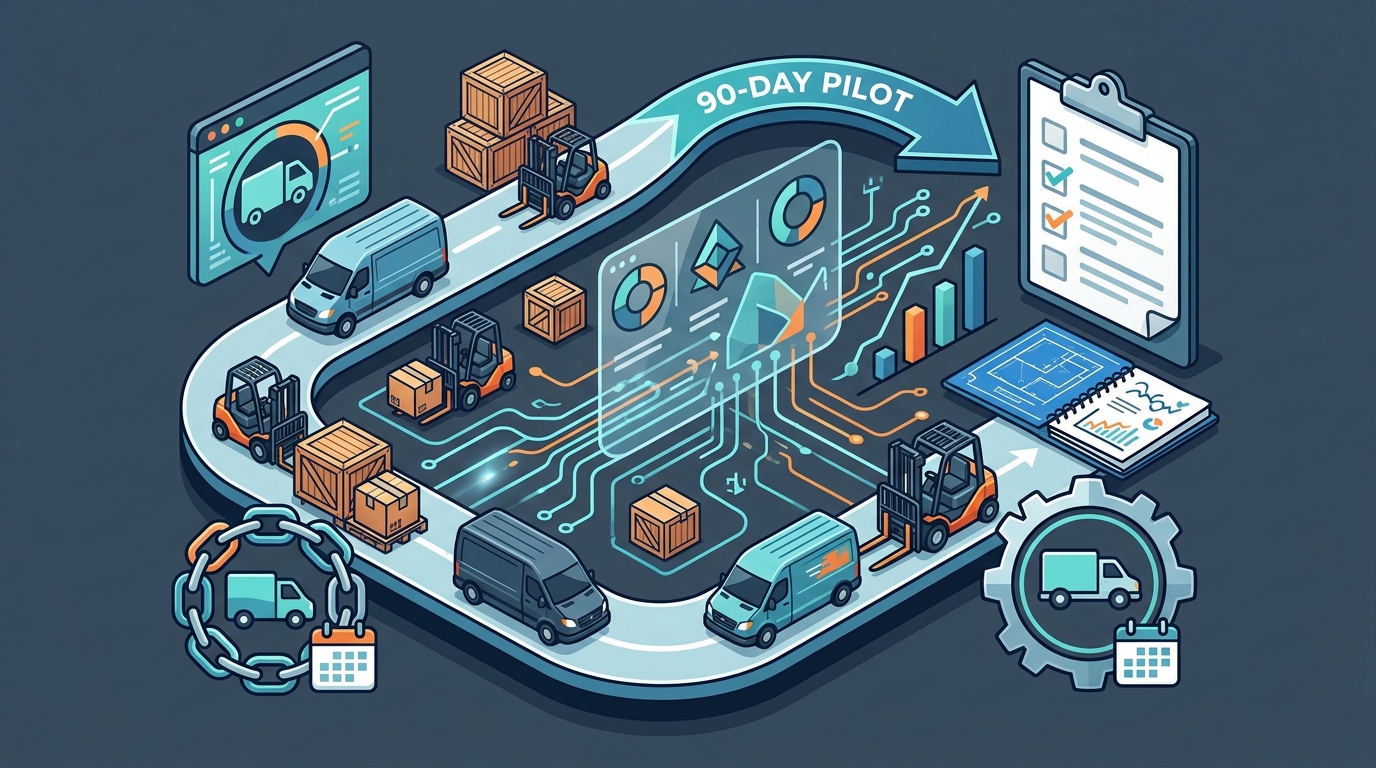
Specific pilot programs for 3PLs focus on automating carrier communications and shipment management. These programs are designed to reduce the administrative burden on logistics teams while maintaining human oversight for critical decisions. The pilot typically runs for a defined period, such as 90 days, allowing teams to assess the AI's performance in a real-world environment.
Carrier Appointment Agent
One common pilot workflow is the carrier appointment agent. This agent triages carrier emails by shipment and appointment, confirming details for operations review. It then prepares shipment-status updates for the team to send. This workflow reduces the time spent on manual email management and ensures that important carrier communications are not missed. The human review step remains the handoff, ensuring that no consequential action is taken without approval.
Shipment Status Updates
Another key area for automation is shipment status updates. AI agents can monitor shipment data and prepare updates for clients or internal teams. This reduces the need for manual tracking and reporting, freeing up staff to focus on higher-value tasks. The agent prepares the work, and a person reviews consequential actions, ensuring accuracy and compliance. This approach allows small 3PLs to scale their operations without increasing headcount.
| Feature | Cogsmith | General AI Tools |
|---|---|---|
| Vertical Focus | Regulated SMBs (3PL, Legal, Medical) | General Purpose |
| Pilot Duration | 90 Days | Variable |
| Human Oversight | Integrated for High-Stakes Actions | Often Limited |
| Trust Services | Integrated AI-Trust Service | Not Typically Included |
Key Takeaways
- Start with one recurring workflow that is high-volume and text-heavy.
- Define clear success metrics and baselines before starting the pilot.
- Choose a vertical-specific vendor that understands your industry's compliance needs.
- Ensure the vendor offers human-in-the-loop guardrails for consequential actions.
- Look for integrated trust services, such as prompt audits and decision logs.
- A 90-day pilot is a standard timeframe for assessing AI workflow performance.
- Focus on workflows like carrier appointment triage and shipment status updates.
- Use the pilot data to justify full-scale deployment and measure ROI.
Frequently Asked Questions
How long does a typical AI pilot program last?
A typical AI pilot program lasts 90 days. This duration allows enough time to gather meaningful data on the AI's performance and impact on your workflow. It is long enough to see trends but short enough to limit risk if the pilot does not meet its goals.
What workflows are best for AI automation in 3PLs?
Carrier appointment triage and shipment status updates are ideal workflows for AI automation in 3PLs. These tasks are repetitive, text-heavy, and follow predictable patterns, making them well-suited for AI agents. They also have a high volume, which means the time savings can be significant.
Do I need to replace my current software?
No, you do not need to replace your current software. AI agents can integrate with your existing systems to handle specific workflows. The goal is to augment your current processes, not to overhaul your entire tech stack. This makes the transition smoother and less disruptive.
How is human oversight maintained in AI pilots?
Human oversight is maintained through human-in-the-loop guardrails. The AI agent prepares the work, but a person reviews consequential actions before they are executed. This ensures that no critical decision is made without human approval, maintaining control and compliance.
What is the cost of an AI pilot program?
The cost of an AI pilot program varies based on the scope of the workflow and the vendor. Cogsmith offers quote-based pricing for pilots, which is scoped to the specific workflow and oversight requirements. It is important to get a detailed quote that outlines all costs before starting the pilot.
Can AI agents handle complex logistics scenarios?
AI agents can handle complex logistics scenarios if they are properly scoped and monitored. However, it is important to define the scope of the agent's capabilities clearly. Out-of-scope actions are held or blocked, ensuring that the agent does not attempt tasks it is not designed to handle. This prevents errors and maintains reliability.
Conclusion
Small 3PLs can find effective AI workflow pilot programs through specialized vendors like Cogsmith. By focusing on vertical-specific solutions and maintaining human oversight, you can safely test AI automation in your logistics operations. Start with one recurring workflow, define clear metrics, and use the pilot data to guide your next steps. To begin your journey, scope a workflow with Cogsmith and discuss how a 90-day pilot can benefit your team.