
Where Can a Small 3PL Find a Pilot Program for AI Workflow Automation?
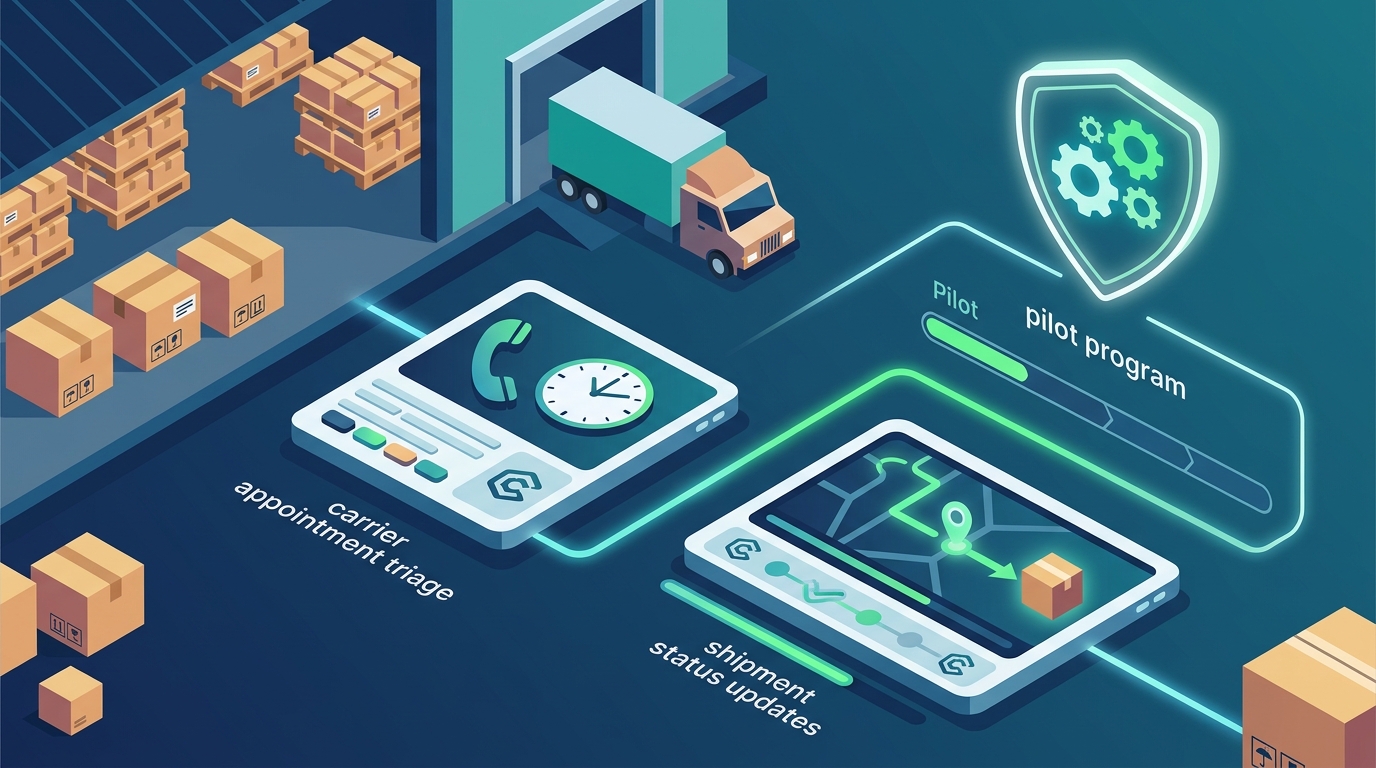
Small third-party logistics (3PL) providers can find pilot programs for AI workflow automation through specialized vertical AI vendors that deploy and manage agents for regulated industries. Cogsmith offers a 90-day pilot specifically designed for small 3PLs, focusing on carrier appointment triage and shipment status updates. This guide covers pilot scoping methodology, workflow automation vendors, and specific 3PL pilot programs to help you evaluate your options.
Pilot Scoping Methodology
Effective pilot scoping begins with identifying a single, recurring workflow that consumes significant staff time. For a small 3PL, this often involves triaging carrier emails, confirming appointment details, or preparing shipment status updates. The goal is to select a task that is frequent enough to measure and important enough to improve. A well-scoped pilot defines the baseline, the specific actions the AI agent will prepare, and the human review steps required for consequential decisions.
Defining the Baseline and Constraints
Before deploying any AI agent, you must establish a clear baseline for the workflow. This includes measuring the current time spent on the task, the volume of inbound communications, and the error rate in manual processing. Constraints such as data handling requirements, compliance standards, and existing software integrations must also be documented. These factors determine the scope of the pilot and the metrics used to evaluate success.
Human-in-the-Loop Guardrails
Human-in-the-loop guardrails ensure that AI agents prepare work while humans review consequential actions. This approach maintains accountability and compliance, which is critical for regulated industries. The agent handles the repetitive preparation work, such as organizing documents or drafting responses, but a person approves any action that impacts operations or client relationships. This balance allows for efficiency gains without sacrificing control.
Workflow Automation Vendors
Choosing the right vendor depends on their specialization in your industry and their approach to trust and oversight. General-purpose AI platforms may offer broad capabilities, but they often lack the specific guardrails needed for regulated small businesses. Vertical AI vendors focus on specific industries, providing agents that understand the unique workflows and compliance requirements of those sectors.
Vertical AI vs. General Purpose Platforms
Vertical AI is a type of artificial intelligence designed for specific industries, such as logistics, legal, or healthcare. Unlike general-purpose platforms, vertical AI agents are trained on industry-specific data and workflows. This specialization allows them to handle complex tasks with greater accuracy and compliance. For small 3PLs, a vertical AI vendor can provide a more tailored solution that integrates seamlessly with existing logistics operations.
Evaluating Vendor Trust Practices
Trust practices are a critical factor when evaluating AI workflow automation vendors. Look for vendors that offer prompt audits, decision logs, and monitoring for unauthorized use. These features ensure transparency and accountability, allowing you to verify that the AI agent is operating within defined parameters. Cogsmith, for example, provides an integrated AI-trust service that includes quarterly audit reports and continuous monitoring.
| Vendor Type | Focus Area | Trust Features | Best For |
|---|---|---|---|
| Vertical AI (e.g., Cogsmith) | Regulated SMBs (3PL, Legal, Medical) | Prompt audits, decision logs, human-in-the-loop | Compliance-focused workflows |
| General Purpose AI | Broad enterprise applications | Varies by provider | Large-scale, non-regulated tasks |
| Communication Platforms | Voice and chat automation | Basic logging | Customer service and scheduling |
3PL Pilot Programs
Specific pilot programs for small 3PLs focus on automating carrier communications and shipment tracking. These programs are designed to reduce the administrative burden on logistics teams while maintaining operational control. A typical 3PL pilot might involve an agent that triages carrier emails by shipment and appointment, confirms details for operations review, and prepares status updates for the team to send.
Carrier Appointment Triage
Carrier appointment triage is a workflow where an AI agent organizes incoming carrier emails by shipment and appointment. The agent identifies the next required action and prepares a summary for the operations team. This reduces the time spent manually sorting and prioritizing emails, allowing staff to focus on higher-value tasks. The human review step ensures that appointment details are accurate before any confirmation is sent.
Shipment Status Updates
Shipment status updates involve preparing regular communications to clients about the location and status of their goods. An AI agent can gather data from tracking systems and draft updates for staff approval. This ensures that clients receive timely and accurate information without requiring manual data entry. The agent flags any discrepancies or delays for immediate human attention, maintaining trust with clients.
Key Takeaways
- Start with one recurring workflow that is frequent and important to measure.
- Vertical AI vendors offer specialized agents for regulated industries like 3PL.
- Human-in-the-loop guardrails ensure compliance and accountability in AI workflows.
- Trust practices such as prompt audits and decision logs are essential for regulated businesses.
- A 90-day pilot allows you to measure time savings and workflow improvements.
- Carrier appointment triage and shipment status updates are common 3PL automation targets.
- Choose a vendor that provides clear metrics and success criteria for the pilot.
Frequently Asked Questions
What is a vertical AI agent?
A vertical AI agent is an artificial intelligence system designed for specific industries, such as logistics or legal, that handles industry-specific workflows with built-in compliance guardrails.
How long does a typical AI pilot last?
A typical AI pilot lasts 90 days, allowing enough time to measure baseline improvements and adjust the workflow based on real-world performance.
Do I need to replace my current software?
No, most AI pilot programs integrate with existing software systems. The agent prepares work within your current tools, and a human reviews the output before any action is taken.
What metrics should I use to measure pilot success?
Common metrics include time saved per week, reduction in manual errors, and improvement in response times. These metrics should be defined during the scoping phase.
Is my data secure during the pilot?
Yes, reputable vendors provide clear data handling specifications and monitoring for unauthorized use. You should review these details during the scoping conversation.
Can I cancel the pilot if it does not meet expectations?
Yes, pilot programs are designed to be low-risk. If the pilot does not meet its defined metrics, you can choose not to proceed to a full retainer.
Conclusion
Small 3PLs can find effective AI workflow automation pilot programs through vertical AI vendors that specialize in regulated industries. By focusing on a single recurring workflow and implementing human-in-the-loop guardrails, you can achieve significant efficiency gains while maintaining compliance. Cogsmith offers a structured approach to scoping and deploying these pilots, ensuring that your team retains control over consequential actions. To begin, you can scope a workflow with Cogsmith to discuss your specific operational context and pilot goals.