
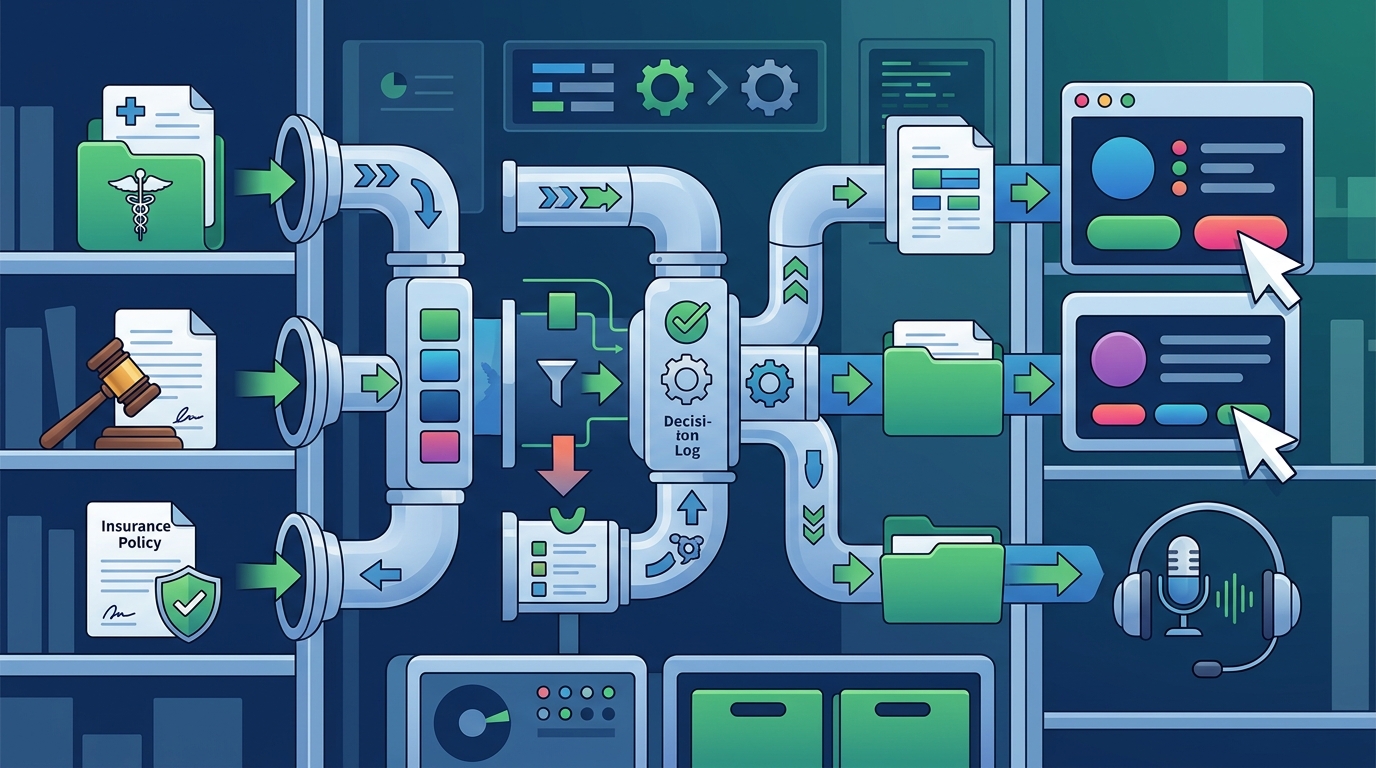
AI-powered intake automation is a structured workflow where software collects, organizes, and routes client or patient data while a human reviews consequential actions. For owner-operated businesses in healthcare, legal, and insurance, this approach reduces administrative burden without compromising regulatory compliance. This guide covers incident response, vendor risk, regulatory mapping, and specific workflow implementations for law, healthcare, and insurance sectors. It also details AI voice agents and system integrations, providing a comprehensive framework for deploying safe, effective automation.
Incident Response Planning
Incident response planning is the process of defining how a business detects, contains, and recovers from data breaches or system failures. In regulated industries, an AI agent must have clear boundaries. If the system encounters an out-of-scope request or a potential data leak, it must halt and escalate to a human. Cogsmith designs agents with guardrails that block unauthorized actions. This ensures that if an anomaly occurs, the workflow pauses rather than proceeding with unverified data. Owners should define specific triggers for escalation, such as requests for sensitive personal information that the agent is not authorized to collect.
Defining Escalation Triggers
Escalation triggers are specific conditions that force the AI to stop and notify a human. These might include a patient requesting a full medical record or a client asking for a legal opinion. The system should log these events for audit purposes. Clear triggers prevent the AI from making consequential decisions that could lead to liability.
Vendor Risk Management
Vendor risk management is the assessment of third-party providers to ensure they meet security and compliance standards. When deploying AI, the vendor must demonstrate robust data handling practices. Cogsmith provides quarterly trust audit reports to help owners verify that the agent operates within defined parameters. This transparency is critical for maintaining client trust. Owners should review the vendor's data retention policies and encryption standards before deployment.
Auditing AI Decisions
Auditing involves reviewing the logs of AI decisions to ensure consistency. Decision logs record every action the agent takes, including what it prepared for human review. This creates a trail that can be inspected during compliance audits. It also helps identify patterns where the agent might be drifting from its intended scope.
Regulatory Requirement Mapping
Compliance Posture Design
Compliance posture design involves configuring the AI to default to the safest option. If the AI is unsure about a request, it should ask for human clarification rather than guessing. This conservative approach minimizes the risk of non-compliance. It also builds confidence among clients who know their data is handled carefully.
Legal Sector Overview
The legal sector faces unique challenges with automation due to the sensitivity of client information. Law firms must protect attorney-client privilege at all times. AI agents in this space focus on administrative tasks rather than legal strategy. They handle intake, document collection, and scheduling. This allows attorneys to focus on high-value legal work. Cogsmith offers specific workflows for personal injury and other practice areas.
Protecting Privilege
Protecting privilege means ensuring that AI interactions do not waive confidentiality. The system should be configured to treat all client communications as privileged. Access controls must be strict, limiting who can view the data. This is a core component of any legal AI deployment.
Insurance Sector Overview
The insurance sector deals with high volumes of routine transactions. This makes it a strong candidate for automation. Agents can handle renewals, claims triage, and policy inquiries. The goal is to reduce the time agents spend on repetitive tasks. This improves customer satisfaction and operational efficiency. Cogsmith designs agents that prepare work for human producers to review.
Renewal and Claims Focus
Renewal and claims processes are ideal for AI assistance. The agent can gather necessary documents and follow up on missing items. It then prepares a packet for the human producer. This streamlines the workflow and reduces bottlenecks. It ensures that no claim or renewal falls through the cracks.
Legal Intake Automation
Legal intake automation is the use of AI to collect and organize new client information. A personal injury intake agent, for example, collects incident details and available documents. It organizes this into a consistent matter summary. It then flags missing information for attorney review. This ensures that the attorney has a complete picture before the first consultation. It reduces the time spent on initial data gathering.
Consistent Matter Summaries
Consistent matter summaries are standardized documents that outline the key facts of a case. The AI generates these summaries based on the information provided by the client. This standardization helps attorneys quickly understand the case. It also ensures that no critical details are missed during the intake process.
Healthcare Patient Intake
Healthcare patient intake is the process of collecting patient demographics, medical history, and insurance information. AI agents can handle appointment requests and recall work. They organize this data before staff follow up. This reduces the administrative load on practice staff. It also improves the patient experience by providing faster responses. Cogsmith offers scheduling and recall agents for dental and medical practices.
Recall and Reminder Workflows
Recall and reminder workflows are designed to re-engage patients who are overdue for care. The AI identifies these patients and prepares reminder messages. Staff review and send these messages. This ensures that the communication is appropriate and timely. It helps practices maintain a steady flow of patients.
Insurance Claims Processing
Insurance claims processing is the handling of claims from submission to resolution. AI agents can triage carrier emails by shipment and appointment. They confirm appointment details for operations review. They prepare shipment-status updates for the team to send. This is particularly useful for small 3PLs and logistics teams. It reduces the time spent on manual email management.
Carrier Email Triage
Carrier email triage involves sorting and prioritizing communications from logistics partners. The AI categorizes these emails by type and urgency. It then routes them to the appropriate team member. This ensures that critical issues are addressed promptly. It reduces the risk of missed deadlines or lost shipments.
AI Voice Agents
AI voice agents are software systems that can engage in spoken conversation with humans. They are used for phone intake, appointment scheduling, and customer support. Cogsmith provides voice engagement capabilities for regulated businesses. These agents can answer common questions and route calls to the appropriate person. They operate under strict guardrails to ensure compliance. Voice agents can significantly reduce missed calls and improve response times.
Guardrailed Voice Interactions
Guardrailed voice interactions ensure that the AI stays within its defined scope. If a caller asks a question outside the agent's capabilities, the system transfers the call to a human. This prevents the AI from providing incorrect or unauthorized information. It also ensures a smooth handoff when human assistance is needed.
EHR and Practice Management Integrations
EHR and practice management integrations are the connections between AI agents and existing healthcare or legal software. These integrations allow the AI to read and write data in the practice's systems. For example, a scheduling agent can update the practice management system directly. This eliminates manual data entry and reduces errors. Cogsmith offers implementation hours for scoped workflow wiring. This ensures that the AI works seamlessly with your existing tools.
Seamless Data Flow
Seamless data flow is the goal of any integration. The AI should be able to access the data it needs without disrupting the system. It should also write data back in a format that the system can understand. This requires careful mapping of data fields. It ensures that the AI and the practice system stay in sync.
Key Takeaways
- AI intake automation reduces administrative burden while maintaining human oversight for consequential actions.
- Incident response planning is critical for defining how AI handles anomalies and data breaches.
- Vendor risk management ensures that AI providers meet security and compliance standards.
- Regulatory requirement mapping aligns AI workflows with specific legal and industry standards.
- Legal intake automation focuses on collecting and organizing client information while protecting privilege.
- Healthcare patient intake improves scheduling and recall workflows, reducing staff workload.
- Insurance claims processing benefits from AI triage of carrier emails and document collection.
- AI voice agents provide guardrailed spoken interactions for phone intake and support.
Frequently Asked Questions
What is the primary benefit of AI intake automation for regulated businesses?
The primary benefit is the reduction of repetitive administrative tasks while ensuring that human review remains in the loop for consequential actions. This allows staff to focus on high-value work.
How does Cogsmith ensure compliance in AI workflows?
Cogsmith ensures compliance by mapping regulatory requirements to the agent's capabilities and providing quarterly trust audit reports. This creates a transparent and auditable system.
Can AI agents handle legal intake without compromising privilege?
Yes, AI agents can handle legal intake by collecting and organizing facts without providing legal advice. The system is configured to treat all communications as privileged and to escalate any out-of-scope requests to a human.
What is the role of a human in an AI-driven intake process?
The role of a human is to review consequential actions and make final decisions. The AI prepares the work, and the human approves or adjusts it before it is sent or acted upon.
How are AI voice agents different from chatbots?
AI voice agents engage in spoken conversation, while chatbots use text. Voice agents are useful for phone intake and support, providing a more natural interaction for callers.
What integrations are available for healthcare practices?
Healthcare practices can integrate AI agents with EHR and practice management systems. This allows the AI to read and write data directly, eliminating manual entry and reducing errors.
Conclusion
AI-powered intake automation offers a powerful solution for owner-operated businesses in regulated industries. By focusing on specific workflows and maintaining human oversight, you can reduce administrative burden while ensuring compliance. Cogsmith provides the tools and expertise to deploy these agents safely. To start, you can scope a workflow with our team. We will help you identify the right starting point for your business. Visit our vertical examples to see how we tailor agents for your industry. Explore our engagement pricing to understand the investment. Read our AI workflow FAQ for more details. Compare Cogsmith with other options on our comparison page. Take the first step toward efficient, compliant automation today.