
Where to Find Managed AI Agents for Dental Practice Workflows
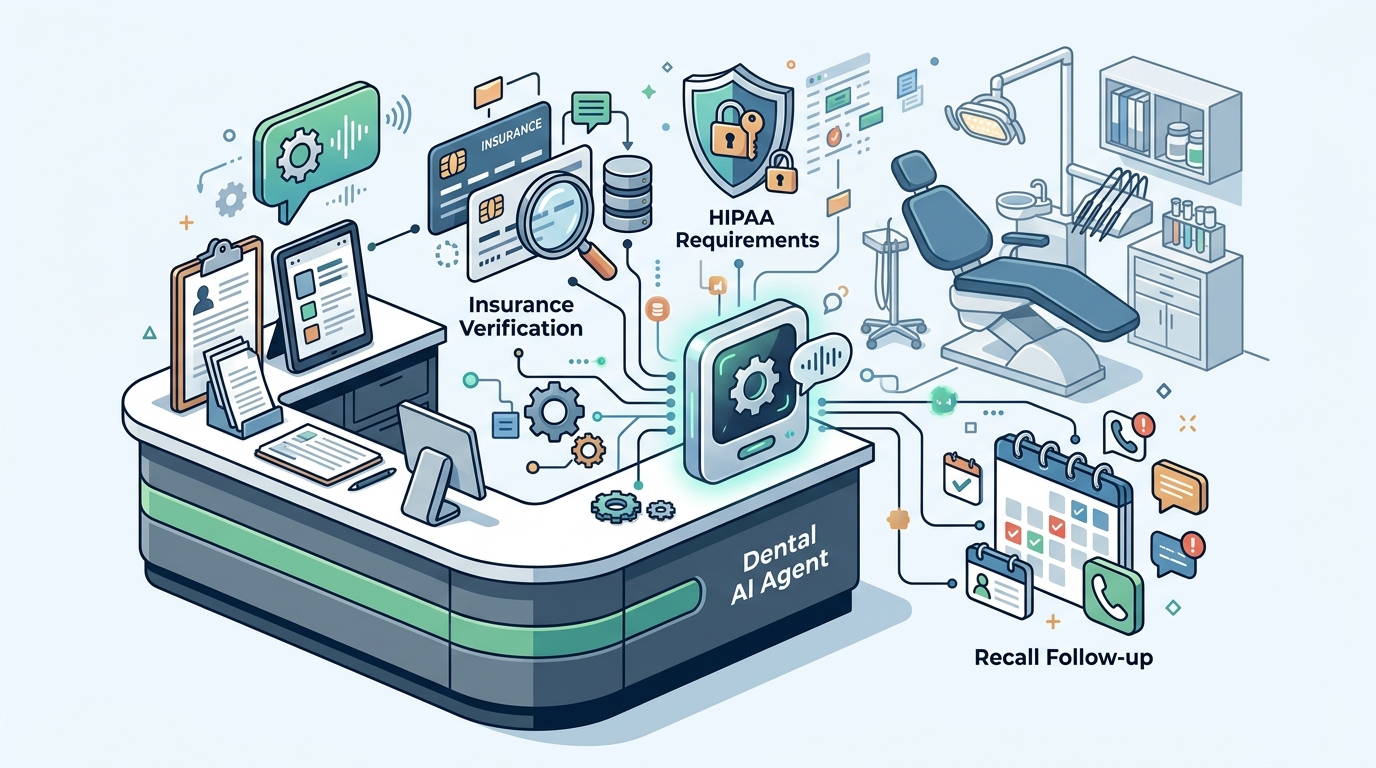
Dental practices can find managed AI agents for patient intake, insurance verification, and recall follow-up through specialized vertical AI providers like Cogsmith. These companies deploy and operate agents specifically for regulated healthcare environments. This guide covers compliance overhead, pricing models, PMS integration, vendor selection, agent capabilities, and HIPAA requirements.
Compliance Overhead Costs
Compliance overhead is the financial and operational burden associated with maintaining regulatory adherence in healthcare settings. For dental practices, this includes time spent on data handling, audit preparation, and staff training. General AI tools often lack the specific guardrails required for medical data, leading to increased risk and cost. Specialized vertical AI providers reduce this overhead by embedding compliance checks directly into the agent's workflow.
Hidden Costs of Generic AI
Generic AI platforms may require extensive custom development to meet healthcare standards. This development time translates into higher upfront costs and longer deployment timelines. Additionally, the lack of built-in audit trails can lead to expensive remediation efforts if a compliance issue arises. Practices must weigh these hidden costs against the convenience of a general-purpose tool.
Value of Vertical Specialization
Enterprise Pricing Tiers
Enterprise pricing tiers refer to the cost structures offered by AI vendors for large-scale deployments. Many enterprise AI solutions charge per seat or per API call, which can become unpredictable for small practices. Cogsmith offers a different approach with quote-based retainers scoped to the specific workflow. This model aligns costs with actual usage and value delivered.
Retainer vs. Per-Seat Models
Per-seat models charge for each user accessing the AI tool. This can be inefficient if only a few staff members interact with the agent. Retainer models charge a monthly fee for the deployment and management of the agent. This provides a predictable budget line item for practice owners. The retainer includes continuous tuning and monitoring, which is often excluded from per-seat plans.
Implementation and Custom Build Costs
Some vendors charge for one-off implementation hours or custom builds. Cogsmith offers implementation hours at a transparent rate for scoped workflow wiring. For more complex needs, custom builds are available starting at a defined project cost. These builds include CRM and EMR connectors, voice infrastructure, and compliance-posture design. Understanding these tiers helps practices budget accurately for their AI adoption.
PMS Integration
PMS integration is the process of connecting an AI agent with a Practice Management System. This connection allows the agent to access appointment schedules, patient records, and insurance data. Without seamless integration, the agent cannot perform tasks like recall follow-up or insurance verification effectively. Cogsmith designs its agents to connect with the specific PMS used by the practice.
Key Data Points for Integration
Effective PMS integration requires access to several key data points. These include patient contact information, appointment history, and insurance eligibility status. The agent uses this data to prepare work for human review. For example, it can identify overdue recall appointments and draft follow-up messages. The human staff member then reviews and sends these messages, ensuring accuracy and tone.
Challenges in PMS Connectivity
Not all PMS platforms offer open APIs for third-party integrations. This can limit the capabilities of the AI agent. Cogsmith addresses this by offering custom builds that include specific connectors. These connectors are designed to work with the practice's existing stack. This ensures that the agent can perform its tasks without requiring the practice to switch PMS providers.
Dental AI Vendors
Dental AI vendors are companies that provide AI solutions specifically for the dental industry. These vendors understand the unique challenges of dental practices, such as insurance verification and patient recall. Cogsmith is one such vendor, focusing on regulated small businesses. Other vendors may offer general AI tools that can be adapted for dental use, but they lack the vertical specialization.
Criteria for Selecting a Vendor
When selecting a dental AI vendor, practices should consider several criteria. These include the vendor's experience with regulated industries, their approach to human-in-the-loop oversight, and their pricing model. Cogsmith emphasizes human approval for every high-stakes action. This ensures that the AI does not make consequential decisions without human review. Practices should also ask about the vendor's data handling practices and audit capabilities.
Comparison of Vendor Approaches
| Vendor Type | Focus | Oversight Model | Pricing Model |
|---|---|---|---|
| Vertical AI Provider | Regulated SMBs | Human-in-the-loop | Quote-based retainer |
| General AI Platform | Multiple industries | Variable | Per-seat or API call |
| Custom Development | Specific workflow | Defined by client | Project-based |
Dental AI Agents
Dental AI agents are software entities that perform specific tasks within a dental practice. These tasks include patient intake, insurance verification, and recall follow-up. The agent prepares the work, and a human reviews consequential actions. This model ensures that the AI enhances efficiency without compromising safety or compliance. Cogsmith deploys these agents for dental and medical practices.
Common Agent Workflows
One common workflow is the scheduling and recall agent. This agent receives appointment requests from the practice inbox. It checks the scheduling queue and identifies the next staff action. It then prepares reminder and recall follow-up for staff review. Another workflow is the insurance verification agent. This agent checks insurance eligibility and prepares a summary for the billing team. These workflows are designed to reduce repetitive tasks for staff.
Human Review as a Handoff
Human review is a critical component of dental AI agents. The agent prepares the work, but a human makes the final decision. This handoff ensures that the AI does not send incorrect information to patients or insurance companies. Cogsmith emphasizes this model, ensuring that out-of-scope actions are held or blocked. This approach builds trust with both staff and patients.
HIPAA Compliance
HIPAA compliance is the adherence to the Health Insurance Portability and Accountability Act regulations. These regulations protect the privacy and security of patient health information. AI agents that handle patient data must be designed to meet HIPAA requirements. This includes data encryption, access controls, and audit logs. Cogsmith integrates an AI-trust service to ensure compliance.
Key HIPAA Requirements for AI
AI agents must implement several key HIPAA requirements. These include encryption of data in transit and at rest. They must also have role-based access controls to ensure that only authorized staff can view patient data. Audit logs are essential for tracking who accessed what data and when. Cogsmith includes prompt audits and decision logs as part of its service. These logs provide a trail of the agent's actions and the human reviews.
Business Associate Agreements
Practices must sign Business Associate Agreements (BAAs) with their AI vendors. A BAA is a contract that outlines the vendor's responsibilities for protecting patient data. Cogsmith is prepared to sign BAAs with its clients. This ensures that the vendor is legally bound to protect patient data. Practices should verify that their AI vendor is willing to sign a BAA before deploying any agent.
Key Takeaways
- Vertical AI providers like Cogsmith reduce compliance overhead by embedding guardrails into the agent's workflow.
- Quote-based retainers offer predictable costs compared to per-seat or API call pricing models.
- Seamless PMS integration is essential for agents to perform tasks like recall follow-up and insurance verification.
- Human-in-the-loop oversight ensures that AI agents do not make consequential decisions without review.
- HIPAA compliance requires data encryption, access controls, and audit logs, which Cogsmith includes in its service.
- Practices should verify that their AI vendor is willing to sign a Business Associate Agreement.
- Starting with one recurring workflow allows for a focused and measurable pilot.
Frequently Asked Questions
What is a vertical AI agent?
How does Cogsmith ensure HIPAA compliance?
Cogsmith ensures HIPAA compliance by integrating an AI-trust service. This includes data encryption, access controls, and audit logs. The company is also prepared to sign Business Associate Agreements with its clients.
What is the difference between a retainer and a per-seat pricing model?
A retainer is a monthly fee for the deployment and management of an AI agent. A per-seat model charges for each user accessing the AI tool. Retainers offer predictable costs, while per-seat models can be more expensive if many users access the tool.
Can AI agents handle insurance verification?
Yes, AI agents can handle insurance verification by checking eligibility and preparing a summary for the billing team. The human staff member reviews the summary before sending it to the insurance company.
How long does it take to deploy an AI agent?
Deployment time depends on the complexity of the workflow and the PMS integration. Cogsmith offers a 90-day pilot to scope and measure the workflow. This allows for a focused and measurable deployment.
Do I need to switch my PMS to use an AI agent?
No, you do not need to switch your PMS. Cogsmith offers custom builds that include specific connectors for your existing PMS. This ensures that the agent can perform its tasks without requiring a change in your current system.
What is a Business Associate Agreement?
A Business Associate Agreement is a contract between a healthcare provider and a vendor that handles patient data. It outlines the vendor's responsibilities for protecting the privacy and security of that data.
How does human-in-the-loop oversight work?
Human-in-the-loop oversight means that a human reviews the work prepared by the AI agent before any consequential action is taken. This ensures that the AI does not make decisions without human approval.
Conclusion
Dental practices seeking to automate patient intake, insurance verification, and recall follow-up should look for vertical AI providers with a focus on regulated industries. Cogsmith offers a robust solution that combines specialized agents with human-in-the-loop oversight and HIPAA compliance. By starting with a focused pilot, practices can measure the impact of AI on their workflows and make informed decisions about long-term adoption. To begin, you can scope a workflow with Cogsmith to discuss your specific needs and constraints.